









Silicon Carbide Semiconductors: Why India Needs Domestic SiC Manufacturing Now
Silicon Carbide Semiconductors: Why India Needs Domestic SiC Manufacturing Now
 admin
admin
 9 Minute Read
 27th May 26
Silicon carbide (SiC) semiconductors are not futuristic technology but they are essential infrastructure for the energy transition happening right now. Electric vehicles, renewable energy systems, data centres, and industrial power electronics all depend on SiC semiconductors to operate efficiently. Yet India, despite being a global technology leader, currently imports virtually all of its SiC semiconductor needs. This dependency carries strategic, economic, and competitive risks that are beginning to receive serious policy attention.
Why Silicon Carbide Matters: The Semiconductor Revolution
Conventional silicon (Si) semiconductors have dominated power electronics for decades. However, silicon has fundamental physical limits. As devices shrink and operate at higher temperatures and frequencies, silicon reaches its performance ceiling. Silicon carbide, by contrast, has superior electrical properties: higher thermal conductivity, wider bandgap, higher breakdown voltage, and better performance at elevated temperatures.
The practical result: SiC devices are smaller, operate at higher temperatures, switch faster, and lose less energy as heat than silicon equivalents. This translates to electric vehicles with longer range, renewable energy systems with higher conversion efficiency, and data centers with lower cooling loads.
The global semiconductor industry recognizes this advantage. Every major power semiconductor manufacturer, from Infineon to CREE to STMicroelectronics, is investing heavily in SiC capacity. Yet India, which produces the world’s most semiconductors by unit count, currently lacks any domestic SiC manufacturing capability.
The Electric Vehicle Imperative
India’s electric vehicle ambitions are ambitious: the government targets 30% EV penetration in passenger vehicles and 40% in commercial vehicles by 2030. Achieving these targets requires a reliable, affordable supply of power semiconductors, and SiC is critical to EV performance.
Modern EV powertrains use SiC devices in the on-board charger, DC-DC converter, and motor drive inverter. SiC’s superior efficiency directly translates to longer battery range and lower charging times, which are key consumer pain points limiting EV adoption. An EV using SiC power electronics can achieve 10-15% greater range than an equivalent vehicle using silicon, without increasing battery size or cost.
Currently, every SiC semiconductor in an Indian EV is imported, adding cost and creating supply chain vulnerability. Establishing domestic SiC production would lower costs, secure supply, and enable Indian OEMs to compete globally on both price and performance.
Renewable Energy and the Grid Transition
India’s renewable energy capacity is growing rapidly, but intermittency remains a challenge. Grid stability requires sophisticated power conversion systems — solar inverters, wind turbine converters, and battery storage systems — all of which rely on power semiconductors for efficiency and reliability.
SiC semiconductors enable more efficient power conversion, meaning less energy is wasted as heat, lower cooling requirements, and more compact systems. For renewable energy projects where space and cost are constraints, SiC provides a decisive advantage. Yet India’s renewable energy manufacturers must currently import these critical components.
The Data Centre Opportunity
Data centre power consumption is accelerating globally. In India, as digital services expand and cloud computing demand surges, data centre capacity will grow exponentially. Every watt of power consumed in a data centre requires power conversion electronics — and SiC devices enable more efficient conversion than silicon.
A large data centre can save 5-10% in total power consumption by upgrading power supply systems to SiC-based designs. For facilities running 24/7 at high capacity, this translates to millions of rupees in annual operating cost savings.
India’s Strategic Gap in SiC Manufacturing
Despite being a global semiconductor hub, India currently lacks domestic SiC production. All SiC wafers, dies, and packaged devices are imported, creating several vulnerabilities:
Cost disadvantage: International suppliers price SiC components assuming long-distance logistics and import tariffs. Domestic production would lower costs by 15-20% and improve price competitiveness of Indian products globally.
Supply chain risk: Any disruption in international SiC supply chains affects Indian manufacturers immediately. Domestic production provides resilience.
Technology gap: Countries with SiC manufacturing develop expertise, patents, and ecosystem advantages that drive innovation. India’s absence from SiC manufacturing means missing out on this innovation frontier.
Geopolitical exposure: As SiC becomes more critical to national infrastructure (EVs, grid, defence), countries controlling SiC supply gain leverage. India’s dependence creates vulnerability.
Sicsem: India’s First Commercial SiC Fab
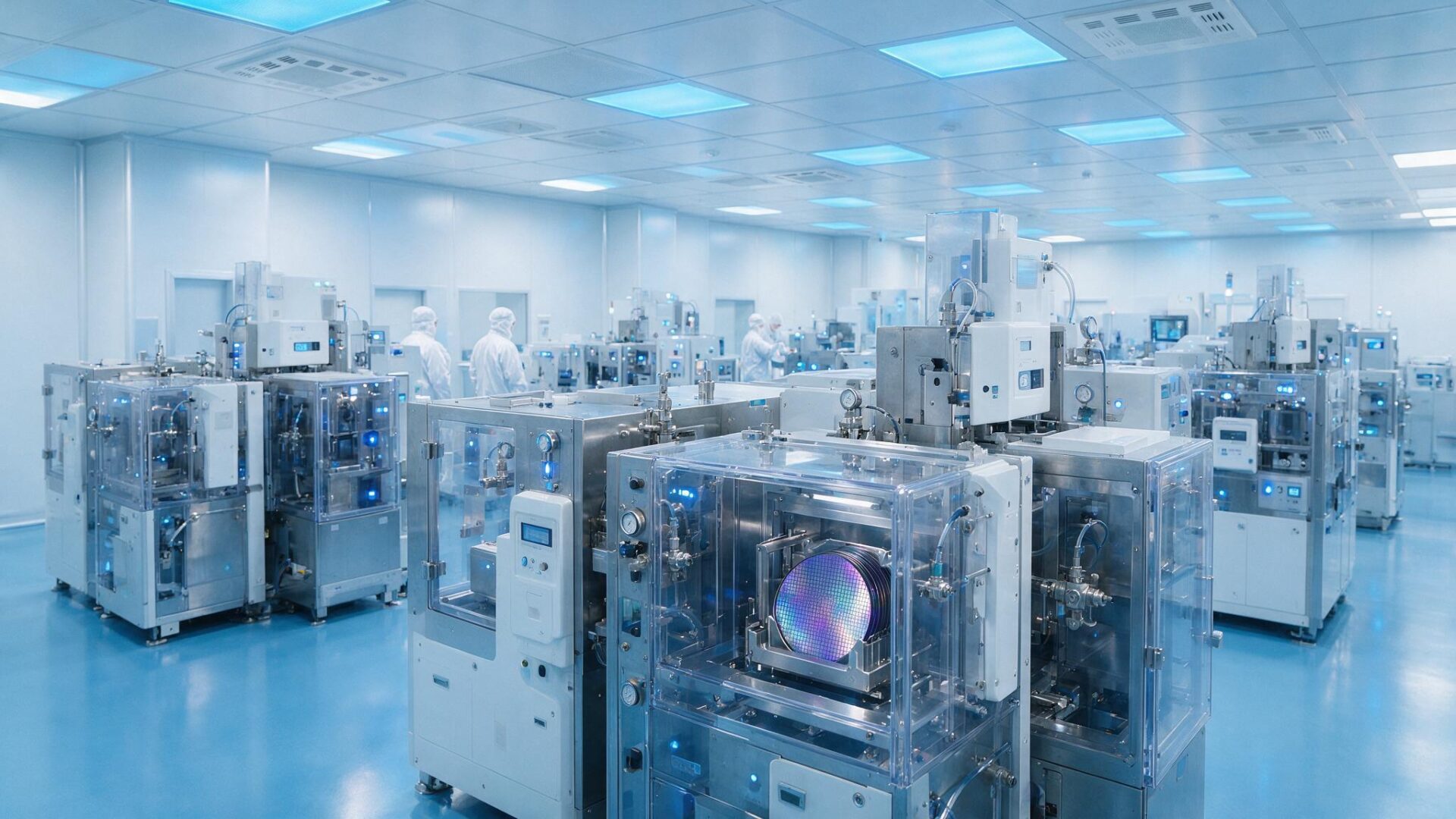
Archean Chemical Industries’ subsidiary Sicsem Private Limited is developing India’s first commercial silicon carbide semiconductor Fab and Assembly, Test, Mark and Pack (ATMP) facility at Info Valley, Bhubaneswar, Odisha. Phase 1 investment of ₹2,067 Crores will create a facility targeting 60,000 wafers per annum capacity and 96 million units per annum packaging capacity.
Sicsem received ISM approval in August 2025 and represents India’s serious entry into compound semiconductor manufacturing. The facility will support EV manufacturers, renewable energy companies, data centre operators, and industrial equipment makers across India and globally.
Building the Ecosystem: Beyond Manufacturing
Establishing SiC manufacturing is only the beginning. A robust SiC ecosystem requires:
Device design expertise: Engineers who understand SiC-specific circuit design and thermal management.
Supply chain integration: Packaging materials, thermal management solutions, and circuit board designs optimized for SiC.
Applications engineering: Support teams helping OEMs integrate SiC devices into their products.
Manufacturing ecosystem: Wafer fabs, packaging facilities, test and quality assurance capabilities.
Sicsem’s entry into SiC manufacturing will catalyze development of this broader ecosystem. As the facility ramps production and demonstrates commercial viability, private investment in supporting infrastructure will follow.
Conclusion: Strategic Imperative
Silicon carbide semiconductors are not optional technology — they are essential infrastructure for India’s energy transition, EV ambitions, and digital future. Establishing domestic SiC manufacturing capacity is not merely a business opportunity; it is a strategic imperative for technological independence, cost competitiveness, and long-term economic advantage.
Archean’s commitment to developing India’s first commercial SiC fab positions the company at the frontier of India’s semiconductor ambitions and signals to the global market that India is serious about building advanced materials manufacturing capability.
Page Contributors
I must explain to you how all this mistaken idea of denouncing pleasure and praising pain was born and I will give you a complete account of the system, and expound the actual teachings of the great explorer of the truth, the master-builder of human happiness. No one rejects, dislikes, or avoids pleasure itself, because it is pleasure, but because those who do not know how.

The Archean Editorial Team brings together perspectives from across our businesses — sharing insights on marine chemistry, sustainability, and the industries we serve worldwide.
